Guruparampara
About the Guru — Sri Aascharyanandha
Sri Sai Aascharyanandha is the present Guru and Peetadhipati of Shambavi Peetam, carrying Sri Vidya through initiation, ritual, writing and community practice.
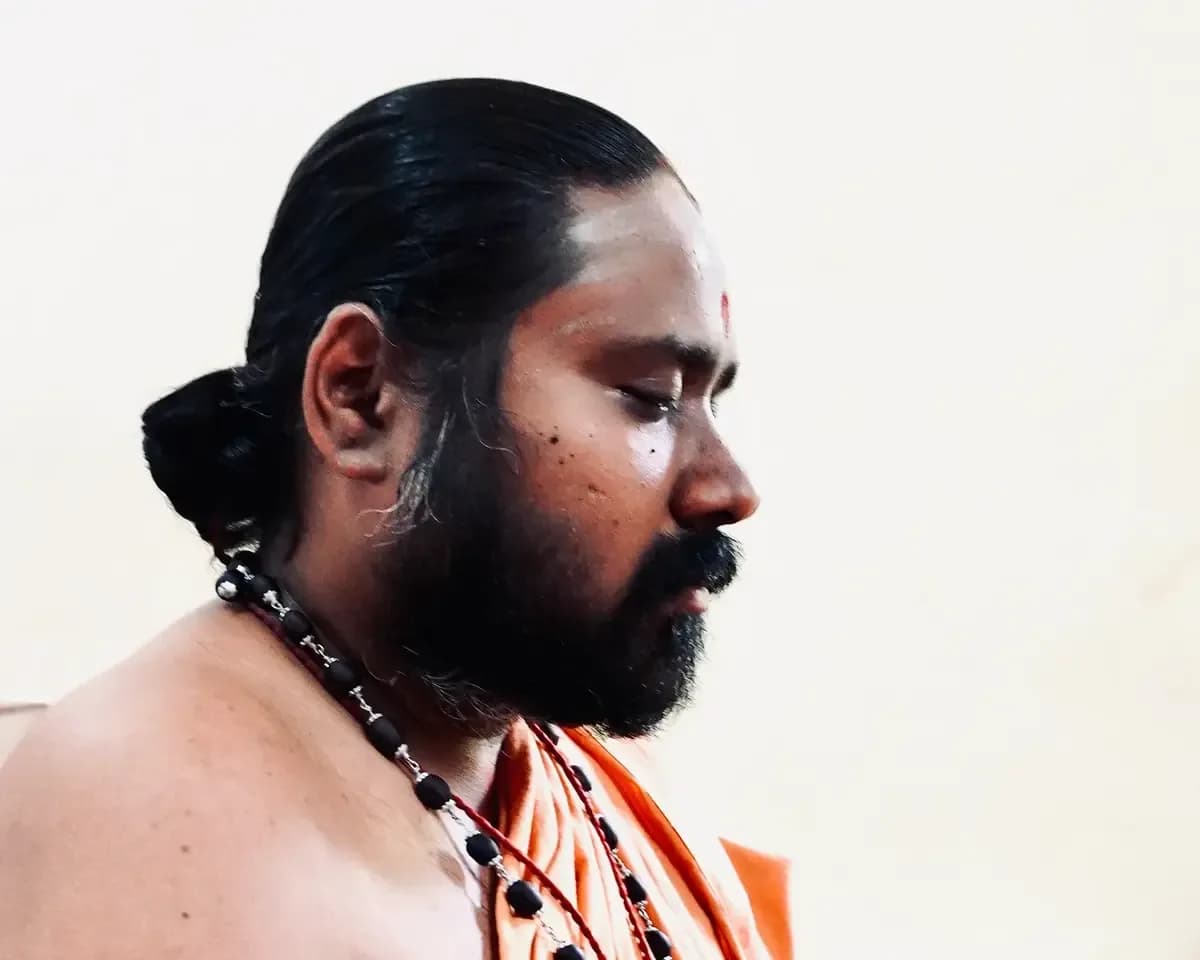
Sri Sai Aascharyanandha is the present Guru of Shambavi Peetam. His work is rooted in Sri Vidya Sadhana and brings together initiation, mantra, yantra worship, traditional ritual, writing and community participation. His emphasis is practical: spiritual life should be carried through ordinary responsibilities, not separated from them.
Early life and transformation
Born as Gautham in a small town near Madurai, Tamil Nadu, he lost his father when he was eleven months old and was raised single-handedly by his mother. Despite the hardship he pursued his education with dedication and completed a Bachelor of Commerce; known for discipline and focus even in youth, he represented his school in volleyball.
At that time his life showed no visible inclination toward spirituality. A series of deeply personal and existential challenges led him to a crossroads. During a particularly difficult phase he found solace in a nearby temple, visiting daily for three continuous months, seeking clarity. That consistent surrender brought him into the field of vision of his future Guru, Sri Pushyanandha. After months of silent observation, his Guru initiated him with Kundalini Deeksha. At the age of nineteen, following the Maha Samadhi of his Guru in February 2014, he was named the spiritual successor of Shambavi Peetam — his own mother draping him in saffron robes as Gautham renounced worldly identity and stepped into his dharma as Sri Sai Aascharyanandha.
Significance of the name
- Sri
- Auspiciousness, divine grace and prosperity — and Raja Vidya, the royal path of knowledge in the Sri Vidya tradition.
- Sai
- The integrated art-style of Sri Vidya that embraces both Shiva and Shakti in aikya bhava, non-dual union.
- Aascharyanandha
- "The bliss of the miraculous" — the ecstatic states derived from profound yogic and tantric practice.
Spiritual lineage and tradition
Shambavi Peetam follows an authentic Guru-Sishya Parampara, tracing its lineage from Lord Shiva → Devi → Nandhi → Dattatreya → Sri Pushyanandha → Sri Aascharyanandha. The Peetam is rooted in Sri Vidya Tantra, in both Bhu Prasthara (flat Sri Chakra worship) and Meru Prasthara (three-dimensional worship). The lineage is preserved and transmitted through live initiations, ritual transmissions of Shakti Path, and community-driven sadhana programmes.
Mission, vision and core values
His teachings focus on making authentic spiritual knowledge accessible to all while maintaining the depth and sacredness of the practices. He actively breaks down barriers of caste, creed, gender and social background, and emphasises that spiritual life is not separate from material life but the foundation on which peace, clarity and success are built — solution-based spirituality rather than theoretical discourse.
- Inclusivity
- Non-discrimination in every initiation and every ritual.
- Community
- Upliftment through collective sadhana.
- Wholeness
- Holistic spiritual and psychological wellness.
- Grounding
- Rituals based on intuitive insight and scriptural foundation.
Rituals and special sadhanas
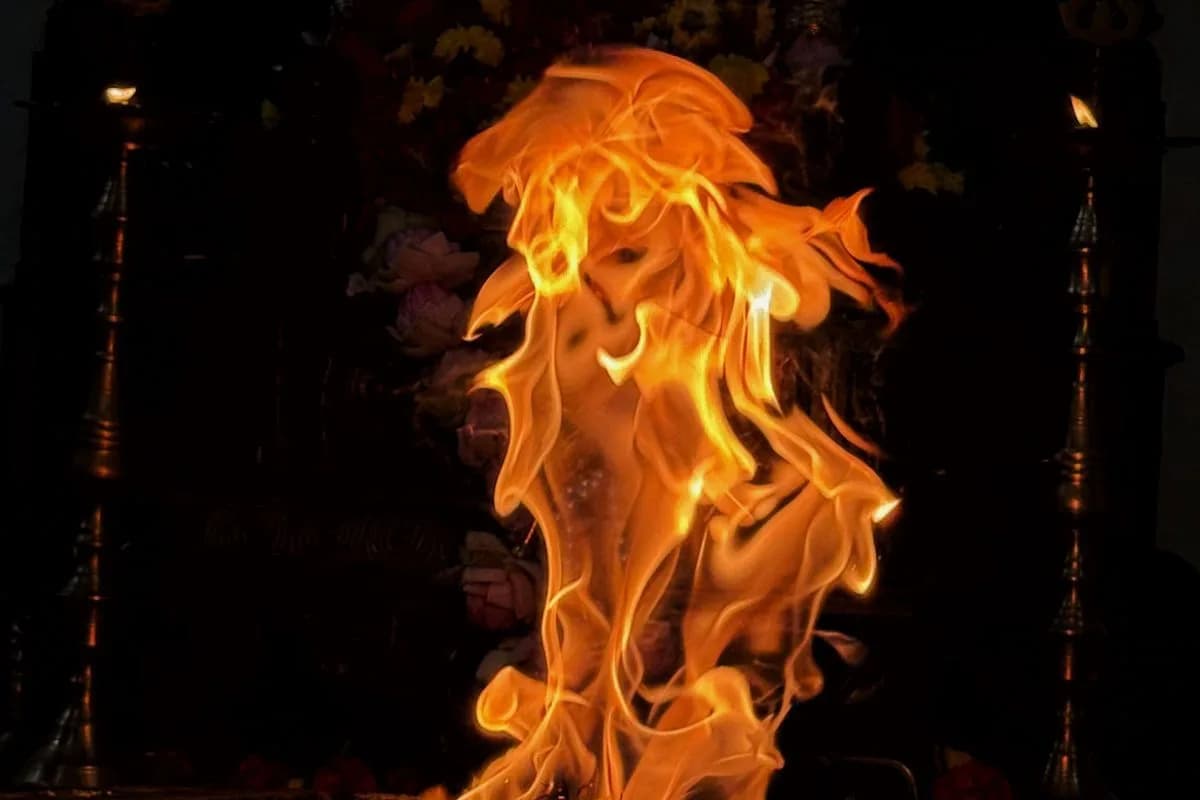
Sri Aascharyanandha designs and conducts yagyams and tantric prayogas within the Peetam’s tradition. These observances use mantra, fire offerings, yantra installation and disciplined participation. They are offered as acts of worship and sankalpa; they should not be presented as guaranteed remedies for medical, financial or personal outcomes.
- Sri Skandha Krama
- A distinctive worship sequence bringing Murugan, Shiva and Parvati into prayer around the Abhayeshwara Linga and Sri Chakra.
- Prathyangira Maha Yagyam
- A traditional fire ritual offered in prayer for courage, protection and steadiness.
- Mangala Chandika Prayoga
- Draws on Devi traditions and is conducted as worship for auspiciousness and the clearing of inner obstacles.
- Shakthi Panchakshara
- A tantric fire ritual centred on Shiva-Shakti worship, mantra and disciplined attention.
- Vedavagini and Aparajita
- Maha yagyams arranged according to an individual or collective sankalpa.
Abhayeshwara Linga — the spiritual heart of the Peetam
At the spiritual heart of the Peetam is the Abhayeshwara Linga installed with the Sri Chakra Meru. The name may be understood as “the Lord who removes fear.” For the Peetam community, this configuration brings Shiva and Shakti into one field of worship and provides a steady centre for pooja, contemplation and shared prayer.
Regular pujas and abhishekams include Panchaamrita Abhishekam, Bilva archana and Chandi chanting. Seekers often describe the shrine as a quiet and grounding place, while each person’s experience remains their own.
Literary works
Guruji is an author and spiritual poet whose books gather poetry, reflection and teachings from his lived practice. The published works include Words Onto Divine and Yoga Mozhi, along with later titles in English and Tamil.
- Words Onto Divine
- English — poetry and reflections from personal spiritual experience. ISBN 9781638062141.
- Yoga Mozhi
- Tamil — poetic insight emerging from deep spiritual states. ISBN 9781638060604.
- Unimpede
- English — a spiritual perspective on overcoming inner resistance.
- Voice of Shambavi
- English — on the grace of the Divine Mother.
- Bodhini
- Slokas on deities written during mystical experience.
- Eeswara Viruttam
- A Tamil poetic discourse on nature-based spirituality.
Tantralayam, outreach and community work
Alongside the Peetam, Guruji established Tantralayam as a contemporary space for meditation, reflection and spiritual support. He also leads community chanting, public rituals, workshops and broadcasts. These offerings may support personal reflection, but they are not a substitute for professional medical or mental-health care.
Spirituality is not separation; it is sacred participation in the fullness of life.